Request for Applications
The FSR Cardiac Grant for sarcoidosis research application is now closed.
The FSR Cardiac Grant began in 2022. This opportunity allows for researchers to apply with an existing or new project and aims to support smaller scale or pilot research projects dedicated to cardiac sarcoidosis, which can be funded either singularly by FSR or through a partnership with additional funders. Each proposal should feature a $100,000 project over a two-year period.
Applicants will be notified by late July if you are invited to submit a full grant proposal. Full applications will not be accepted unless notification of invitation has been received from FSR.
Cardiac Sarcoidosis Grant Eligibility Criteria:
- Proposals for the FSR Cardiac Grant must be for research that focuses on cardiac sarcoidosis. We invite clinician scientists from any related disciplines to apply (e.g., radiology, electrophysiology).
- Proposals for research studies focused on areas other than cardiac sarcoidosis are not eligible.
- Principal Investigators (PIs), Co-PIs, and Sub-Is, must submit bio-sketches in the NIH format (or equivalent international formats) as well as any letters of support from anyone collaborating on the proposal.
- The PI must be affiliated with a college, university, or a non-profit research facility that is willing to serve as the administering organization if the grant is awarded.
- Proposals are accepted from the U.S. and internationally, however all proposals must be submitted in English and budgets must be proposed in U.S. Dollars.
The Foundation for Sarcoidosis Research does not award grants directly to individuals.
Restrictions
- The budget for the FSR Pilot Grant is limited to $100,000 and may include up to 10% indirect costs.
- Compensation for personnel—including principal investigators, co-investigators, and key study staff—may not exceed the NIH salary limitation in effect at the time of award.
- Budgets that include research lab equipment that utilizes over 50% of the proposed budget must include justification and a description of how that equipment will be used in the post-grant period.
- All awardees must submit bi-annual progress and financial reports to FSR. Bi-annual reports are due at the end of each 6-month period while the grant period is active.
- Projects proposed may not be longer than two years in duration.
- Successful applicants may not hold any other research funding from FSR at the time funding of this grant begins. This includes funding from the FSR Established Investigator, Early Career Fellowship Grant, Pilot Grant, and Cardiac Grant. However, FSR Clinical Data Registry investigators may apply.
- PIs and Co-PIs may not submit more than one application for this program in a given cycle.
FSR Research Agenda
FSR has undertaken a comprehensive process to develop a new research agenda that will guide its funding priorities and strategic direction. FSR employed a rigorous four-stage process to develop its research priorities, including conducting a literature review; hosting a brainstorming workshop with key stakeholders including physicians, patients, and caregivers; conducting direct stakeholder interviews; and facilitating a quantitative prioritization survey of the FSR community. Read more about the FSR Research Agenda here.
Through this process, FSR established five primary research priorities and six research values that should guide all funded research.
Research Priorities
Successful research proposals will need to be aligned with one or more of the following priorities:
Research Values
Where appropriate and/or possible, all FSR-funded research should demonstrate the following characteristics:
Letter of Intent Instructions:
Please enter information as requested in all sections on the ProposalCentral LOI application form.
Proposals should be no longer than two pages in length, single-spaced, utilizing 12-point font and 1-inch margins, and attached in PDF format in Section 7 (Attachments). Proposals should include the following information:
1. Project Title and Summary
2. Brief description of project and research focus
3. Primary objectives of the project
4. Methodology
5. Alignment with the FSR Research Agenda priorities and values.
b. Please review this document here before applying. Appendix C (page 28-on) can help you prepare this section.
c. You must mention the exact FSR Research Agenda Priority that best aligns with your project.
d. Provide justification for the alignment of your proposal.
Letter of Intent must be submitted through ProposalCentral by 11:59pm EST on June 4, 2026. Questions should be submitted to research@stopsarcoidosis.org
LOI applications will be evaluated in the following areas:
- Significance: the importance and potential impact of the proposed research on the field of sarcoidosis
- Approach: the rigor and feasibility of the methods proposed to achieve the project’s goals
- Alignment with FSR’s Research Agenda Priorities and Values: strength of alignment with investigator-identified primary priority.
Full applications will be evaluated according to the latest NIH review criteria by the FSR Scientific Review Committee. Additionally, full applications will be reviewed by the FSR Patient Stakeholder Review Committee to evaluate the impact of the project from the patient perspective, and the project's alignment with FSR’s Research Agenda Priorities.
2026 Timeline for Applicants
April 24, 2026: LOI applications open
June 4, 2026: Deadline for LOIs
June 2026 – July 2026: LOI review period
Late July: Invitations to submit full applications sent
September 14, 2026: Deadline for full proposals
September 2026 – October 2026: Final review period
Late November: Awardee notification
Reports and Payments
- Bi-annual Reports: The grantee will send a bi-annual report of activities and financial reports.
- Grant fund payments will be contingent on and align with the bi-annual report schedule.
- Annual Report and Evaluation: All grantees may be asked to participate in a patient-friendly colloquium reporting on the experience, research outcomes, and grant preparation and application process.
Any resulting publications or presentations must acknowledge the support of FSR. FSR should be sent a copy of all resulting publications in PDF format.
If you have any questions, please contact research@stopsarcoidosis.org.
Watch FSR's Cardiac and Pilot Grant Writing Webinar
2026-2028 Awards
FSR is proud to award two grants in the amount of $100,000 each to Dr. Chieh-Yu Lin from Washington University School of Medicine in St. Louis and Dr. Nisha Gilotra from Johns Hopkins University School of Medicine.
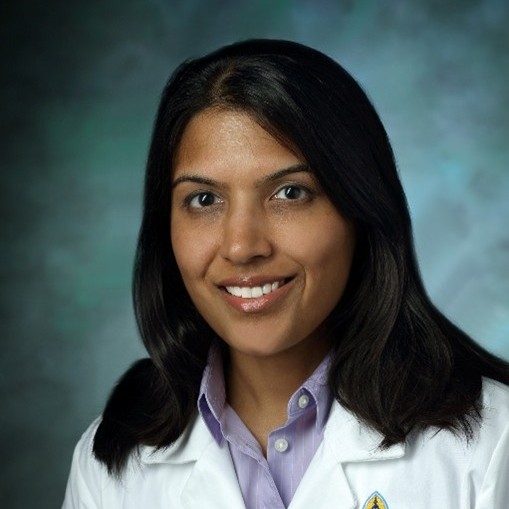 Dr. Gilotra’s project, Multidimensional Phenotypic Stratification in Cardiac Sarcoidosis: A Machine Learning and Patient-Centered Approach to Clarifying Disease Heterogeneity, will build off prior work that identified differences in how patients experience cardiac sarcoidosis, and use artificial intelligence to predict arrhythmia and other outcomes using cardiac images. Dr. Gilotra will incorporate patient perspectives on their disease status with clinical data to better define subgroups of cardiac sarcoidosis and predict who will experience organ involvement, treatment response, and symptoms or cardiac events.
“This funding will allow us to better phenotype cardiac sarcoidosis, a heterogeneous and poorly understood complication of sarcoidosis that is life threatening for our patients,” said Dr. Gilotra. “We are immensely grateful for this opportunity to apply novel strategies to the investigation of to whom, when and how sarcoidosis develops in the heart, and what it means for our patients’ trajectory.”
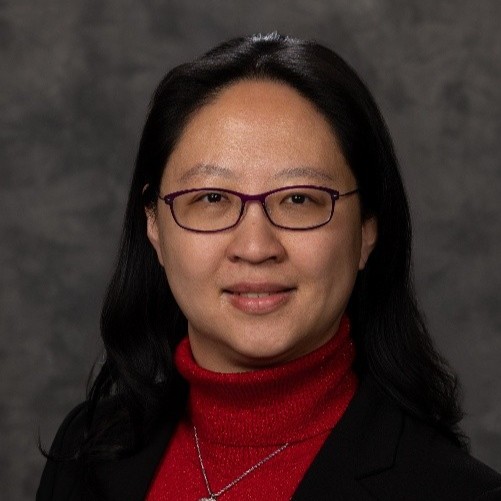 Dr. Lin’s project, Molecular Imaging to Measure Disease Activity and Predict Treatment Response in Cardiac Sarcoidosis, will investigate a specific marker of inflammation (CCR2) in cardiac sarcoidosis. She believes this can be utilized to better diagnose and monitor patients by testing a CCR2-specific PET imaging tracer that has been used safely in human studies for other disease conditions.
“Cardiac sarcoidosis is a disease very close to my heart as a cardiothoracic pathologist,” said Dr. Lin. “However, it is so challenging to diagnose despite our best efforts. This grant will enable me to work with an excellent multidisciplinary team to improve the diagnostic and prognostic accuracy for cardiac sarcoidosis patients, and I am grateful to have this opportunity.”