Applications are now closed
FSR’s Pilot Grant began in 2018. This opportunity allows researchers to apply with an existing or new project and aims to support smaller scale or pilot research projects in sarcoidosis, which can be funded either singularly by FSR or through a partnership with additional funders. Each proposal should feature a $100,000 project over a two-year period with up to 10% indirect costs permitted.
Applicants will be notified by late July if you are invited to submit a full grant proposal. Full applications will not be accepted unless notification of invitation has been received from FSR.
Pilot Grant Eligibility Criteria:
- Proposals for the FSR Pilot Grant must be for research in the sarcoidosis space. We invite clinician scientists from any discipline to apply (dermatology, radiology, neurology, pulmonology, rheumatology, etc).
- Proposals for research studies focused on areas other than sarcoidosis are not eligible.
- Principal Investigators (PIs), Co-PIs, and Sub-Is, must submit bio-sketches in the NIH format (or equivalent international formats) as well as any letters of support from anyone collaborating on the proposal.
- The PI must be affiliated with a college, university, or a non-profit research facility that is willing to serve as the administering organization if the grant is awarded.
- Proposals are accepted from the U.S. and internationally, however all proposals must be submitted in English and budgets must be proposed in U.S. Dollars.
The Foundation for Sarcoidosis Research does not award grants directly to individuals.
Restrictions
- The budget for the FSR Pilot Grant is limited to $100,000 and may include up to 10% indirect costs.
- Compensation for personnel—including principal investigators, co-investigators, and key study staff—may not exceed the NIH salary limitation in effect at the time of award
- Budgets that include research lab equipment that utilizes over 50% of the proposed budget must include justification and a description of how that equipment will be used in the post-grant period.
- All awardees must submit bi-annual progress and financial reports to FSR. Bi-annual reports are due at the end of each 6-month period while the grant period is active.
- Projects proposed may not be longer than two years in duration.
- Successful applicants may not hold any other research funding from FSR at the time funding of this grant begins. This includes funding from the FSR Established Investigator, Early Career Fellowship Grant, Pilot Grant, and Cardiac Grant. However, FSR Clinical Data Registry investigators may apply.
- PIs and Co-PIs may not submit more than one application for this program in a given cycle.
FSR Research Agenda
The Foundation for Sarcoidosis Research (FSR) has undertaken a comprehensive process to develop a new research agenda that will guide its funding priorities and strategic direction. FSR employed a rigorous four-stage process to develop its research priorities, including conducting a literature review; hosting a brainstorming workshop with key stakeholders including physicians, patients, and caregivers; conducting direct stakeholder interviews; and facilitating a quantitative prioritization survey of the FSR community. Read more about the FSR Research Agenda here.
Through this process, FSR established five primary research priorities and six research values that should guide all funded research.
Research Priorities
Successful research proposals will need to be aligned with one or more of the following priorities:
Standardization of Patient-Centered Outcomes
Research that identifies and standardizes outcome measures and endpoints that matter to patients.
Examples:
- Development of validated outcome measures that reflect patient priorities (including clinical outcomes as well as functional or patient reported outcomes like fatigue, quality of life, and other key symptoms)
- Creation of standardized clinical trial endpoints that reflect meaningful improvements in patient function and well-being
- Establishment of consensus definitions for disease activity and response to treatment
Biomarkers for Disease Prognosis/Progression
Research that identifies or defines biomarkers for disease prognosis or progression.
Examples:
- Identification of molecular signatures that predict disease course
- Development of biomarkers that can identify likelihood of progression (e.g., from chronic to acute/severe)
Diagnostic Innovation
Research that discovers or improves upon techniques for diagnosing the disease.
Examples:
- Development of novel diagnostic algorithms
- Validation of new imaging techniques for early detection
- Creation of diagnostic tools for specific organ involvement
- Identification and validation of a reliable biomarker to facilitate accurate diagnosis
Quality of Patient Care
Research that contributes to the improvement of consistency and quality of patient care.
Examples:
- Development of evidence-based treatment guidelines
- Creation of care coordination protocols
- Implementation of standardized assessment tools
Treatment Monitoring
Research that identifies or defines biomarkers for monitoring treatment effects.
Examples:
- Development of imaging biomarkers that track disease progression
- Validation of blood-based markers for monitoring disease activity
- Development of validated biomarkers for treatment response
- Creation of tools to predict treatment efficacy
- Validation of monitoring protocols
Letter of Intent Instructions
Please enter information as requested in all sections on the ProposalCentral LOI application form.
Proposals should be no longer than two pages in length, single-spaced, utilizing 12-point font and 1-inch margins, and attached in PDF format in Section 7 (Attachments).
Proposals should include the following information:
- Project Title and Summary
- Brief description of project and research focus
- Primary objectives of the project
- Methodology
- Alignment with the FSR Research Agenda priorities and values.
- Please review this document here before applying. Appendix C (page 28-on) can help you prepare this section.
- You must mention the exact FSR Research Agenda Priority that best aligns with your project.
- Provide justification for the alignment of your proposal.
Letter of Intent must be submitted through ProposalCentral by 11:59pm EST on June 4, 2026. Questions should be submitted to research@stopsarcoidosis.org
LOI applications will be evaluated in the following areas:
- Significance: the importance and potential impact of the proposed research on the field of sarcoidosis
- Approach: the rigor and feasibility of the methods proposed to achieve the project’s goals
- Alignment with FSR’s Research Agenda Priorities and Values: strength of alignment with investigator-identified primary priority.
Full applications will be evaluated according to the latest NIH review criteria by the FSR Scientific Review Committee. Additionally, full applications will be reviewed by the FSR Patient Stakeholder Review Committee to evaluate the impact of the project from the patient perspective, and the project’s alignment with FSR’s Research Agenda Priorities.
2026 Timeline for Applicants
April 24, 2026: LOI applications open
June 4, 2026: Deadline for LOIs
June 2026 – July 2026: LOI review period
Late July: Invitations to submit full applications sent
September 14, 2026: Deadline for full proposals
September 2026 – October 2026: Final review period
Late November: Awardee notification
Reports and Payments
- Bi-annual Reports: The grantee will send a bi-annual report of activities and financial reports.
- Grant fund payments will be contingent on and align with the bi-annual report schedule.
- Annual Report and Evaluation: All grantees may be asked to participate in a patient-friendly colloquium reporting on the experience, research outcomes, and grant preparation and application process.
Any resulting publications or presentations must acknowledge the support of FSR. FSR should be sent a copy of all resulting publications in PDF format.
If you have any questions, please contact research@stopsarcoidosis.org.
Research Values
Where appropriate and/or possible, all FSR-funded research should demonstrate the following characteristics:
• High-Quality Data – Research must be supported by robust methodology and data collection, including well-designed study protocols, appropriate statistical power and rigorous data collection and analysis methods.
• Health Equity Focus – Research should address the needs of underserved, marginalized, historically disadvantaged or vulnerable populations, demonstrated through inclusive recruitment strategies, analysis of disparities in care, or targeted interventions for underserved groups.
• Real-World Evidence – Research should leverage real-world data and evidence when appropriate, including integration of registry data, real-world effectiveness studies, and/or leveraging practice-based research networks.
• Patient Voice Integration – Research should reflect and capture patient perspectives and priorities by engaging patients in study design, through the collection of patient experience data and/or development of patient-driven research questions.
• Investigator Development – Research should foster the growth of independent sarcoidosis investigators including mentorship components, career development opportunities and research capacity building.
• Research Leverage – Research should build upon and connect with existing research efforts through cross-institutional collaborations, by building on previous findings, or through shared resources and data
Applications will be evaluated in the following areas:
- Significance: the importance and potential impact of the proposed research on the field of cardiac sarcoidosis
- Approach: the rigor and feasibility of the methods proposed to achieve the project’s goals
- Alignment with FSR’s Research Agenda Priorities and Values: strength of alignment with investigator-identified primary priority
Any resulting publications or presentations must acknowledge the support of the host institution and FSR. FSR should be sent a copy of all resulting publications in PDF format.
If you have any questions, please contact research@stopsarcoidosis.org.
Learn about upcoming funding opportunities by signing up for FSR’s Physician Investigator Newsletter here.
Watch FSR’s Cardiac and Pilot Grant Writing Webinar
Click here to watch the FSR Grant Writing Webinar with Dr. Lisa Maier.
Click here to watch a grant writing webinar with Dr. Wonder Drake focused on how to submit a successful Pilot Grant proposal.
2026-2028 Awards
FSR is proud to award two grants in the amount of $100,000 each to Dr. Christen Vagts from the University of Illinois at Chicago and Dr. Vivienne Kahlmann from Erasmus University Medical Center Rotterdam.
Dr. Vagt’s project, Monocyte Dysregulation as a Driver of Fibrotic Progression in Sarcoidosis, focuses on circulating monocytes, a type of immune cell found in the blood. She will study how monocytes behave differently in patients with sarcoidosis and help doctors recognize which patients are most at risk for fibrosis (scarring) of the lung and other organs.
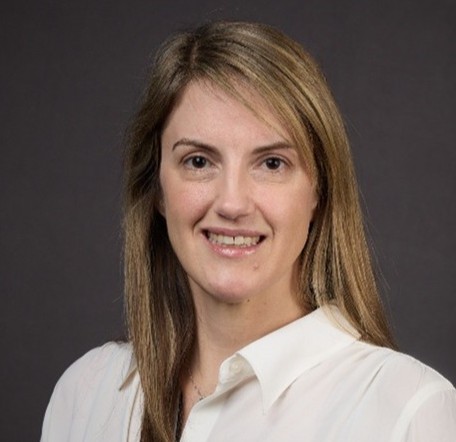 “I am grateful for this award as it allows me to build on the progress made through my previous FSR-supported work and continue pursuing the questions that matter most to my patients with fibrotic pulmonary sarcoidosis,” says Dr. Vagts. “By leveraging existing data, I am working to uncover the immune circuits that contribute to fibrotic progression and generate a clearer framework for how this disease evolves. This pilot funding provides critical momentum toward translating those insights into future diagnostic and therapeutic strategies for a community with few effective options.”
 Dr. Kahlmann’s project, High-resolution computer tomography phenotypes and their correlation with pulmonary function and treatment response in pulmonary sarcoidosis, will use data from the PREDMETH trial, the largest sarcoidosis treatment study in patients who had not received treatment. In this study, she will test CT scans collected in the PREDMETH trial to understand whether the different sarcoidosis subtypes are linked to lung function and treatment response. Dr. Kahlmann hopes to identify imaging markers that enable more personalized treatment decisions and improve care for people living with sarcoidosis.
“We are grateful that the FSR has honored our grant proposal,” said Dr. Kahlmann. “By analyzing HR-CT phenotypes and evaluating their associations with lung function and treatment response, this study aims to support treatment decisions and advance personalized care in sarcoidosis. This research is a collaborative project, thanks to the contributions of co-applicants: Rémy Mostard, Marcel Veltkamp, Karen Moor, and Marlies Wijsenbeek.”
More Past Pilot Grant Awardees
Pilot Grants
| 2025 | Vivienne | Khalmann | Erasmus University Medical Center Rotterdam | High-resolution computer tomography phenotypes and their correlation with pulmonary function and treatment response in pulmonary sarcoidosis |
| 2025 | Christen | Vagts | University of Illinois at Chicago | Peripheral Immune Signatures as Predictors of Fibrotic Progression in Sarcoidosis |
| 2024 | Shaikh | Atif | University of Colorado Denver Health Sciences Center | Understanding the role of Aspergillus nidulans induced Immune responses in sarcoidosis |
| 2024 | Claire | Rice | University of Bristol | Cell-free DNA as a biomarker for neurosarcoidosis |
| 2024 | Satish | Sati | University of Pennsylvania | Role of Type 1 Innate Lymphoid Cells in Sarcoidosis |
| 2023 | Thomas | El Jammal | Hôpital de la Croix Rousse | TBK1 Function in Sarcoidosis: How Genetic Variant Alters Mitochondrial Homeostasis |
| 2022 | Alicia | Gerke | University of Iowa | Airway epithelial response to residential antigens in mild and severe sarcoidosis |
| 2022 | Amanda | Piquet | University of Colorado | Biomarkers of Inflammation and Neuronal Injury with Associated Clinical Outcome Measures in Neurosarcoidosis: A Pilot Study |
| 2021 | Maneesh | Bhargava | University of Minnesota | Comprehensive Assessment of Signal Transduction Pathways in Sarcoidosis |
| 2021 | Peter | Sporn | Northwestern University | Assessment of the Immune Response to SARS-COV2 Vaccination in Sarcoidosis |
| 2020 | Umesh | Deshmukh | Oklahoma Medical Research Foundation | Humanized mouse model for sarcoidosis |
| 2019 | Wonder | Drake | Vanderbilt University Medical Center | What is the clinical impact of IL-6 blockade on sarcoidosis pulmonary fibrosis? |
| 2019 | Nisha | Gilotra | Johns Hopkins University | Immunological and clinical gender-specific differences in cardiac sarcoidosis |
| 2019 | Rafael | Perez | Thomas Jefferson University | Lung Tissue Remodeling in Sarcoidosis: Relationship to Clinical Phenotype and Disease Severity and Progression. |
| 2018 | Girish | Bathla | University of Iowa/Mayo Clinic | Vessel Wall Imagining in Neurosarcoidosis: Underrecognized, Underdiagnosed and Undertreated |
| 2018 | Richard | Silver | Case Western Reserve University | The Role of TCR/TLR2 Co-stimulation in Resolution vs. Progression of Pulmonary Sarcoidosis. |