Sarcoidosis is a complex disease that affects multiple organs and varies widely from patient to patient. To address many of the existing unanswered questions in sarcoidosis research, FSR convened patients and experts in 2024 to develop a new Research Agenda. This Research Agenda outlines a strategic, measurable plan that advances FSR’s mission to accelerate progress toward improved treatments and a cure for sarcoidosis. During these conversations, “biomarkers” were mentioned as crucial areas of discovery to drive sarcoidosis research, but what each expert meant when they spoke about biomarkers varied widely.
As a result, FSR hosted a Biomarker Summit on October 23, 2025, bringing together experts from research and clinical practice to explore a few key questions: What common language should we be using when talking about biomarkers for sarcoidosis, what can we learn from successes in other disease areas, and how can FSR support and accelerate this research over the next 3-5 years?

What Are Biomarkers and Why Do They Matter?
Biomarkers are measurable indicators—like blood tests or imaging results—that tell us something about a disease. For sarcoidosis, biomarkers could help answer questions during diagnosis, when deciding how to manage treatment options, or predicting whether sarcoidosis is likely to progress.
A few biomarker definitions specific to sarcoidosis heard during the Summit:
- Markers that show how the disease affects the whole body, not just one organ
- Measures that help compare different types of sarcoidosis
- Markers that predict which patients with active disease are likely to improve and which might get worse
- Indicators that a treatment is working
The ultimate goal? Personalized treatment—so care is tailored to each individual rather than a ‘one-size-fits-all’ approach.
Incorporation of a Variety of Perspectives
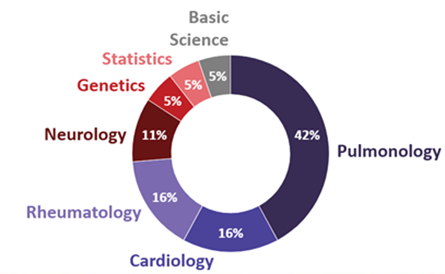
Leading up to the discussion, FSR collected perspectives on sarcoidosis biomarkers from scientific experts, from pulmonology to rheumatology to genetics.
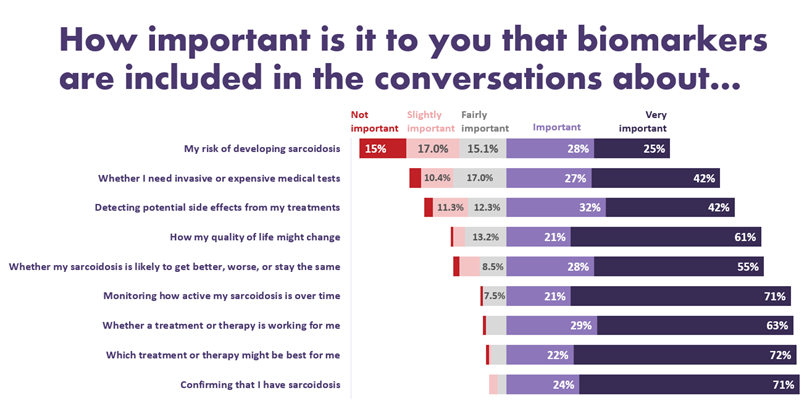
Individuals impacted by sarcoidosis were also invited to share their perspectives, and over 100 weighed in! We brought their insights to set the stage for the Summit, including priorities like the below, in how patients would like to see biomarkers included in conversations with their doctor.
FSR also invited peer organizations, Michael J. Fox Foundation and Crohn’s and Colitis Foundation, to share successes and lessons learned in Parkinson’s disease and inflammatory bowel disease, respectively. This led to robust discussions about how some of these pathways might be translatable to sarcoidosis.
Top Priorities Identified
- Reliable and Modifiable Biomarkers
Biomarkers should not only measure disease but also change as treatment works. They need to be practical, fast, and patient-friendly—blood-based tests are often preferred over invasive procedures like biopsies. - Beyond “Yes or No”
It is unlikely that a single biomarker could capture the complexity of sarcoidosis. Instead, experts noted panels of biomarkers could work in combination to reflect different disease patterns and organ involvement. - Patient-Centered Approach
Biomarker development must align with what matters most to patients—quality of life, symptom burden, and treatment outcomes.

Looking Ahead
The summit emphasized collaboration—across academic institutions, industry, and patient communities. FSR will continue these conversations, hosting virtual workshops and additional community surveys, to create a strategic roadmap to guide support for biomarker research going forward and accelerate the pathway of these discoveries to the clinic.